Blog by Lukasz Kaczmarek

I hope to write about business and technology topics that will stand the test of time and that I won’t be ashamed of.

  • WordPress Day for AI in Faro: More Events Like This, Please

    WordPress Day for AI in Faro: More Events Like This, Please

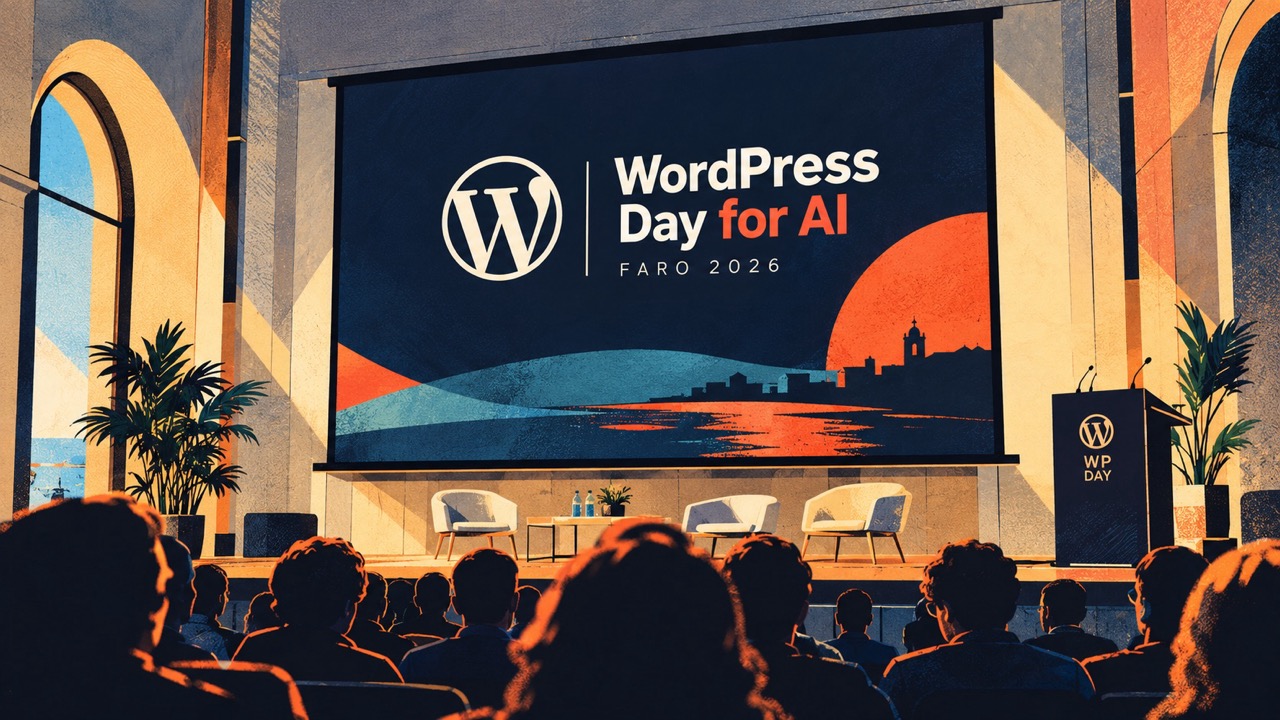
    I spent last Saturday at WordPress Day for AI in Faro, Portugal. I came back with a few interesting ideas, some things I want to experiment with, and one thought that isn’t really about AI at all.

    I think we need more focused WordPress events.

    I’ve attended quite a few WordCamps over the years, and I often have the same problem with them. They try to offer something for everyone, which sounds great in theory but doesn’t always work in practice.

    If you’ve been working with WordPress for years, it’s hard to justify travelling to a conference where half the talks cover things you already know. Make the program more advanced, and you risk losing the beginners.

    You end up with an event where almost everyone can find something interesting, but a good part of the schedule isn’t particularly relevant to them.

    WordPress Day for AI took a different approach. One topic, two tracks (business and development), and a fairly clear idea of who the event was for.

    I liked that.

    Of course, I couldn’t experience the whole conference. Roughly half the sessions were in Portuguese, which I don’t speak, so I stuck to the English-language talks.

    Some were more interesting than others, but there was plenty worth listening to.

    Here’s what I took away from the presentations.

    Dave Lockie – Making WooCommerce ready for AI agents

    Dave’s presentation was one of the more interesting ones for me, especially because it combined AI-assisted development with something I’ve been thinking about lately: how websites should work when the visitor is an AI agent rather than a person.

    He used ChilliMango, his own small hot sauce business, as a testing ground for different experiments.

    One of his observations was that building things was never really the hardest part of running an agency or an online business. Getting a return on that investment was.

    And now, with AI making development significantly easier, that distinction becomes even more important.

    Dave showed a seven-step approach to making a WooCommerce store more accessible to AI agents. It covered everything from allowing crawlers and improving content readability to exposing product information through APIs and MCP, and eventually letting agents perform actions.

    In his experiment, the store’s agent-readiness score improved from 27 to 67 out of 100.

    What I found particularly interesting was that some relatively small changes made a difference. Adding content signals to robots.txt, providing Markdown versions of content, and exposing discovery information helped. Other things, including some commonly recommended optimizations, didn’t seem to change much.

    He also demonstrated how three custom HTML attributes could turn a regular WooCommerce form into something an in-browser AI agent could interact with.

    There’s an important distinction here, though. Improving a score in an agent-readiness assessment isn’t the same as generating traffic or sales from AI agents. And Dave was quite open about the fact that there’s very little of that happening so far.

    Still, I agree with his reasoning. It’s worth experimenting with this stuff now. If agent-friendly websites become standard in a year or two, whatever advantage early adopters might gain will probably be much harder to find.

    There was another interesting point in his talk: AI makes it easier to build things, but testing and understanding what you’ve actually built can become a challenge of its own.

    Which leads nicely to the next two presentations.

    Miguel Costa – Trust, but verify

    Miguel talked about his experience using AI-assisted WordPress development over the past six months.

    He’s now building more functionality himself, relying on fewer plugins, and using AI for everything from creating layouts to managing content and working with existing projects.

    But his main message was about staying in control.

    AI can help you work faster and do more things simultaneously. The downside is that it’s also easier to lose track of what’s happening. Context switching becomes a problem, changes pile up, and something can break without you immediately understanding why.

    His practical advice was pretty straightforward: keep backups of your code and databases, separate development from production, use feature flags, watch what data you’re sending to AI tools, and don’t ignore the costs of long coding sessions.

    He also recommended visual regression testing, which makes a lot of sense when you’re generating changes quickly.

    I wouldn’t say there was anything particularly groundbreaking here. Most of these are good software development practices we’ve known for years.

    But maybe that’s the point.

    AI doesn’t make those practices obsolete. If anything, it makes them more important.

    Ivelina Dimova – Getting from a prototype to a reliable product

    Ivelina’s talk was probably one of the most practically useful ones, particularly for anyone building AI-powered features into WordPress products.

    It’s relatively easy to get an AI prototype working. Getting it ready for production is a different story.

    She went through three areas that need attention: guardrails, evaluations, and governance.

    The guardrails part was particularly interesting. She showed how protection should happen at different stages: checking what goes into an AI system, controlling what actions it can perform, and validating what comes out.

    And these weren’t just abstract principles. She showed how to use familiar WordPress mechanisms like permission checks, REST API hooks, and output sanitization as part of those safeguards.

    She also covered evaluating AI outputs. Some things can be tested with regular code, while others require judging the quality of an answer. In those cases, using another LLM to evaluate results can make sense.

    Tools like Promptfoo and Langfuse came up, along with automated testing, red teaming, monitoring, and handling situations where an AI model produces something unexpected.

    One of her stories involved Claude deleting an entire database during development because it apparently decided that was a reasonable thing to do.

    A good reminder that giving an AI tool access to something doesn’t necessarily mean it should be allowed to use it.

    What I particularly liked was her point about defining success before you start testing.

    If you don’t know what a correct result should look like, it’s difficult to evaluate whether the AI is doing a good job.

    And when something goes wrong, sometimes the best solution is to fall back to a traditional, deterministic process rather than trying to fix everything with another prompt.

    The broader takeaway was clear: you can probably vibe-code a prototype, but building reliable software still requires a systematic approach.

    For agencies developing WordPress solutions with AI features, I think there’s plenty worth remembering here.

    Her presentation slides are available online.

    Samuel Silva – Not everything needs an LLM

    I liked Samuel’s presentation because it approached AI from a slightly different angle.

    Instead of talking about another chatbot or agent, he showed how vector embeddings can improve search in WordPress.

    The idea is quite simple. Rather than relying only on traditional keyword matching, you generate embeddings for your content and use them to find results based on semantic similarity.

    What’s interesting is that you don’t need to involve an LLM every time someone searches for something.

    Samuel demonstrated an implementation using WordPress post metadata and similarity calculations in PHP, without requiring a separate external search service.

    He also compared the potential cost and response time of a search process involving an LLM with one based on embeddings alone. In his example, the embeddings approach was dramatically cheaper and faster.

    Of course, these were illustrative numbers, not a guarantee that every implementation would perform the same way. There are still questions around scale, indexing, and performance.

    But I liked the general idea.

    We spend so much time talking about AI agents and LLMs that it’s easy to overlook the technologies underneath them.

    Sometimes you can take one part of that technology, use it directly, and build something simpler, faster, and cheaper.

    It doesn’t always have to be a chatbot.

    Simone Cimiluca-Radzins and Rose Hes Rozendo – Selling and creating content with AI

    The two business-oriented presentations I attended were interesting in their own way, although I found them a little less relevant to what I’d come to Faro for.

    Simone ran a workshop about selling authentically with AI. She introduced the PET framework (People, Emotions, Trust), discussed understanding your ideal customer, and showed how AI could help create better sales messages rather than another generic landing page.

    One point I liked was that selling doesn’t have to mean manipulating people. You don’t need to put on a performance, but you do need to have a clear point of view.

    Being boring certainly doesn’t help.

    Rose focused on creating content that still feels human in a world increasingly filled with AI-generated material.

    She talked about understanding your own strengths, developing a recognizable style, and checking AI-assisted content for authenticity, accuracy, natural language, and overall quality.

    One idea I particularly liked was that we need to keep exercising our creative instincts.

    If you let AI handle all the ideas, writing, and decisions, there’s a risk you’ll gradually stop developing your own judgment about what’s worth saying and how to say it.

    AI should help with the process, not replace your point of view.

    Both sessions had useful observations, and both included practical AI applications. But to me, they felt closer to general sales and content marketing workshops than to the WordPress-specific AI discussions I was most interested in.

    I’m sure they were valuable for a different part of the audience. They just weren’t quite what I was looking for.

    Jamie Marsland – Build first, learn along the way

    Jamie’s presentation was probably the best illustration of how much the process of building software is changing.

    He walked us through a series of experiments he’d been working on, starting with relatively simple ideas like a font-guessing game and speed-building challenges.

    One project led to another. He experimented with WordPress Playground, simplified editing interfaces, tools for publishing content, and eventually using AI-generated HTML to create websites.

    That led him to another problem: generating HTML is one thing, but how do you make it easy for someone to edit?

    So he built tools to solve that too.

    Eventually, these experiments evolved into a visual editor designed to make working with WordPress feel more like Canva while still using native WordPress blocks.

    What made the story interesting wasn’t any particular tool. It was how he got there.

    Build something. Discover a limitation. Try another approach. Break something. Fix it. Keep going.

    At some point, even testing became part of the AI-assisted workflow, with Claude helping catch problems introduced by subsequent changes.

    One of Jamie’s observations stuck with me.

    Until recently, you generally had to learn how to build something before you could actually build it.

    Now you can start building, discover what’s possible, run into problems, and learn along the way.

    I’m not convinced this approach works equally well for every type of project. As Ivelina’s presentation showed, there’s still a big difference between experimenting and delivering reliable software.

    But it certainly makes things possible for people who would never have attempted them before.

    Jamie ended with three questions that I think are worth thinking about:

    • When anyone can build anything, what’s the moat?
    • How do we show the world what’s now possible?
    • Who should we hire next: a developer, a product person, or someone new?

    I find the first two particularly interesting.

    If building software keeps getting easier, the ability to build something may no longer be much of a competitive advantage on its own.

    Knowing what to build, getting people to discover it, and earning their trust could become even more important.

    And that’s a pretty interesting challenge for both product companies and agencies.

    Why I’d like to see more events like this

    Coming back to the conference itself, I think WordPress Day for AI is a good example of something the WordPress community should do more often.

    Not necessarily more conferences. More focused conferences.

    WordPress is a huge ecosystem. Developers, designers, agency owners, ecommerce specialists, marketers, hosting companies, and people just getting started all have different needs.

    Trying to cover everything at one event is difficult.

    And while general WordCamps are valuable for bringing people together, meeting the community, and discovering things outside your usual area of work, I think there’s plenty of room for more specialized events.

    AI is one obvious topic. But it could just as easily be WooCommerce, performance, security, enterprise WordPress, or something else.

    I’d happily travel to an event where I know most of the sessions will be relevant to what I do.

    That’s a much easier decision than travelling somewhere knowing in advance that I’ll probably skip half the talks.

    There is one thing I would have liked to see in Faro, though.

    Panel discussions.

    I’ve mentioned this before after WordCamp Gdynia, and I still think panels can be among the most valuable parts of a conference.

    Presentations are prepared. The speaker knows what they want to say, which examples to show, and where the story is going.

    A good panel works differently.

    Someone asks an unexpected question. Another person disagrees. The conversation moves into territory nobody planned to cover.

    And that’s often when the most interesting things come up.

    With AI changing as quickly as it is, I’d love to hear more discussions between people actually building products, running agencies, and experimenting with these technologies.

    What’s working? What looked promising but turned out to be a waste of time? What have they changed their minds about?

    Those are the kinds of conversations that can be hard to fit into a prepared presentation.

    Final thoughts

    Overall, I’m glad I made the trip to Faro.

    I didn’t get to see everything, and not every presentation was equally relevant to me. But the technical sessions gave me a few ideas worth exploring, especially around agent-ready websites, AI testing, and using embeddings for search.

    One thing also came up in different forms throughout the day: building things is getting easier, but making them reliable, useful, and commercially successful is still difficult.

    In some ways, that part might become even more important.

    But my biggest takeaway is still about the event itself.

    I like the idea of smaller, more focused WordPress conferences where people know what they’re coming for and have a good chance of learning something relevant to their work.

    I’d like to see more of them.

    Thanks to the organizers and speakers for putting this together.

  • WordCamp Gdynia 2025 – AI, performance basics, and why panels still matter

    WordCamp Gdynia 2025 – AI, performance basics, and why panels still matter

    I spent last weekend at WordCamp Gdynia (Sept 26–28, 2025). The event was hosted at PPNT and this year had both Polish and English tracks. That was a smart move – it brought in more international speakers and made the agenda more diverse, without losing the community feel.

    I didn’t attend every session (hallway talks are always too good to skip), but the ones I joined were solid and gave me a lot to think about.

    AI is changing the WordPress world

    The clear theme: AI is no longer just “something happening elsewhere.” It’s shaping how we design, build, and distribute WordPress sites.

    A few takeaways from sessions and panels:

    • Watch your online reputation. Chatbots don’t just pull from the “big” platforms. They can pick up content from all kinds of review sites and forums – even small, niche ones. One bad review in the wrong place might get repeated by an AI assistant. Reputation monitoring across the web matters more than ever.
    • Websites as APIs. People are asking models for answers instead of visiting pages directly. That means sites should be structured more like data sources – clear taxonomies, schema markup, and even MCP connectors where it makes sense. Don’t rely on models to “guess” from long blocks of text.
    • WordPress is in a good place. Compared with some other CMSs, WordPress looks well prepared for AI integration and experimentation.

    Speed and accessibility – built in from the start

    Two practical reminders:

    • Performance. TTFB is a simple but powerful indicator when your site is getting too heavy. Use tools like Query Monitor to see what’s slowing you down. And sometimes the best fix is the simplest one: just replace a problematic plugin instead of trying to debug it for hours.
    • Accessibility. Using core blocks by default already gives you a solid baseline for accessible markup. Build with them instead of reinventing the wheel.

    CRA – security and compliance are getting real

    The EU Cyber Resilience Act is not just about hardware or big vendors. It will also affect plugin and theme authors, as well as (probably) agencies managing many sites. The message is clear:

    • have a process to report and fix vulnerabilities (VDP),
    • know your dependencies,
    • be able to prove you tested the software,
    • and keep the option to roll back to safe defaults.

    This is coming, so it’s better to prepare now.

    Panels are still gold

    I’ll repeat what I’ve said about other WordCamps: panels are gold. They break up the rhythm of talks, bring in voices that don’t usually apply for solo slots, and give space for debate. I hope organizers keep including them.

    And a word about Gdynia

    Finally – Gdynia itself. It’s one of my favorite Polish cities. Great energy, walkable, and always worth the visit. If the next WordCamp here keeps this format and energy, I’ll be back 😊

  • From Warmth to Numbers: How Agencies Treat Teams in Changing Times

    From Warmth to Numbers: How Agencies Treat Teams in Changing Times

    I keep hearing stories from agencies and dev shops about treating employees like numbers on a balance sheet. It makes me wonder: how do founders so easily transition from nurturing and protecting their teams—often to the point of creating overly cozy environments where mediocrity thrived and unacceptable behaviors were overlooked—during prosperous times to running things with a cold, iron fist when challenges arise? Or hiring someone else to play the “bad cop” under the guise of financial optimization.

    Adjusting strategy or shifting course is sometimes necessary. But what’s inexcusable is the refusal to learn from past mistakes, the constant distortion of reality, and the shameless twisting of marketing narratives.

    During the good times, companies acted as if their teams were made up of top-tier players—even though anyone who could string a few buzzwords together in an interview was hired. Now, as the market shifts, they claim to pivot toward consulting or emphasize “deep expertise,” even as staff churns with every new project, leaving no institutional knowledge behind. The irony is especially glaring when these same companies boast about their “vibrant remote culture” while refusing to invest even minimal resources in real-world team gatherings—not even an annual holiday party to let colleagues finally meet face-to-face.

    The same old shortcuts aimed at quick wins continue to surface: instead of setting realistic goals and working steadily toward them, it’s a frantic scramble for any opportunity to make a quick buck.

    I’ve never heard a smart business leader advocate short-term profit optimization as a viable long-term strategy. All it seems to lead to is endless scheming and constant reorganization.

    If there’s a lesson here, it’s this: sustainable growth comes from building on solid foundations, not from chasing every shiny, short-lived opportunity that comes along.

  • The Importance of Travel in Remote Work

    The Importance of Travel in Remote Work

    In the world of remote work, there are many well-established practices that contribute to maintaining a healthy work-life balance. These include separating work and personal time, getting out of the house, meeting people in real life, exercising, and more. While these strategies are widely recognized and effective, there’s one aspect that is often overlooked but, in my opinion, is incredibly important: regular travel. This is particularly crucial if you work from home.

    I’m not talking about grand adventures to the other side of the world. I’m referring to any kind of travel, no matter the scale. The key is to leave your home and spend some time away from your own bed. I’ve noticed that for me, going away for even a weekend every 2-3 months works wonders.

    There’s a period of 2-3 weeks of anticipation and preparation for the trip, followed by the time spent away, and then a period of recovery and readjustment upon return. After that, you can start thinking about the next getaway. This cycle doesn’t usually occupy a lot of mental space, but it provides a structure that greatly facilitates organization throughout the year.

    Regular travel, even if it’s just a short weekend trip every few months, can bring a refreshing change of pace and environment. It breaks up the monotony of the daily routine and provides something to look forward to. The anticipation and planning of the trip can be just as enjoyable as the trip itself. Moreover, the change of scenery and the opportunity to disconnect from work can help recharge your batteries and bring a renewed sense of motivation and productivity upon return.

    I don’t know if everyone experiences this the same way, but I highly recommend giving it a try. It certainly works for me 🙂

    So, if you’re working remotely and looking for ways to maintain a healthy work-life balance, consider incorporating regular travel into your routine. It doesn’t have to be extravagant or expensive. Even a simple weekend getaway can make a significant difference in your overall well-being and job satisfaction. Give it a shot and see how it works for you!

  • Navigating Life’s Complex Decisions: A Multidimensional Approach

    Navigating Life’s Complex Decisions: A Multidimensional Approach

    In life, we constantly face decisions that require careful consideration across multiple dimensions. However, people often focus on a single aspect, leading to suboptimal choices. To make better decisions, it’s crucial to identify the key factors relevant to the situation and assign weights based on their importance to you.

    Be honest about your true priorities and values, and realistically assess the expected outcomes across these dimensions. Engage in open discussions with trusted individuals who can provide alternative viewpoints to help identify blind spots and broaden your understanding.

    While it’s important to carefully consider all relevant factors, recognize that perfect information is rarely available, and some uncertainty is inherent in most decisions. Strive for clarity of thought and alignment with your values, while being willing to act decisively based on imperfect information.

    Embrace a holistic approach, assign appropriate weights to different dimensions, and be mindful of your own biases. Leading with strong values, sound judgment, and a tolerance for ambiguity is often more important than perfecting an analytical decision-making process.

    By taking a multidimensional approach and being true to yourself, you can navigate life’s complex choices with greater confidence and make decisions that optimize your overall satisfaction and align with your goals.

    Remember, understanding your biases, values, and desires is the key to effective decision-making. When you have a clear grasp of these internal factors, finding the optimal option becomes easier, regardless of whether you need to make a well-informed decision or not. Self-awareness is the foundation upon which sound decisions are built.

  • The Art of Giving Meaningful Advice

    The Art of Giving Meaningful Advice

    In a world full of opinions, giving advice that truly helps is a valuable skill. Good advice is more than just words; it’s about sharing ideas that make a real difference, not just echoing what others might say.

    When someone asks for your advice, it’s an opportunity to offer something genuinely helpful. Avoid just being a cheerleader with phrases like “You go, girl!” Instead, delve deeper. Share from your own experiences or from the wealth of knowledge you’ve gathered, whether from books, articles, or observing others.

    Consider the field of business. Here, advice should extend beyond personal anecdotes. It’s about blending these experiences with a broad understanding of different strategies and theories. This enriches your advice, making it both relatable and insightful.

    Good advice is about more than just encouragement. It involves deeply understanding the issue and offering solutions that demonstrate a comprehensive grasp of the topic. It’s about combining your life lessons with the extensive knowledge you’ve accumulated.

    In summary, effective advice is a mix of support, honesty, and wisdom. Whether it’s drawn from your personal journey or your wide-ranging learning, your advice should aim to inspire growth and enable better decisions.

  • State Of The Word 2023 in Madrid

    State Of The Word 2023 in Madrid

    Both the summary of 2023 and the sneak peek into what is planned for 2024 reinforce my belief that WordPress is on an exciting path and thriving. Clear goals on the horizon and the swift implementation of various improvements are solidifying WordPress’s role as a market leader in CMS…

    My full summary you can find here: https://www.osomstudio.com/blog/state-og-the-word-2023-madrid/

  • Why Remote-First Companies Can’t Hire Just Anyone

    Why Remote-First Companies Can’t Hire Just Anyone

    During the COVID-19 pandemic, many companies transitioned to remote work. As we move forward, it’s crucial to acknowledge a fundamental truth: remote work is not suitable for everyone, and understanding this is key for both companies and employees.

    Initially, many organizations, lured by the flexibility of remote work, tried to adapt wholesale to this model. However, it’s becoming increasingly clear that remote work’s feasibility varies greatly depending on individual circumstances and preferences. For some, factors like living arrangements, family responsibilities, or personal work style make remote work impractical or even stressful.

    Consider the situation where someone lives in a small space with a young child and part of the company’s communication happens via video calls. Neither can the company, in the long run, make an exception for one person, nor can this person keep waking up their small child with conversations. This scenario highlights that the suitability of remote work varies based on individual circumstances.

    From a company’s perspective, the challenge is not just about implementing remote work but also about recognizing when it isn’t the right fit. During recruitment, it’s imperative for companies to discern not just the professional capabilities of candidates, but also their compatibility with a remote working environment. Hiring someone who can’t or doesn’t want to work remotely can lead to long-term issues, such as reduced productivity, strained communication, and a diluted company culture.

    Therefore, companies need to be more discerning in their hiring process, considering not just the skills and experience but also the suitability and willingness of candidates for remote work. This approach will prevent potential problems that could arise from forcing a square peg into a round hole.

    While acknowledging these challenges, it’s also important to recognize that for the right person and the right role, remote work can offer unparalleled flexibility and efficiency. The era of remote work demands a new kind of awareness from both employers and employees. Recognizing and respecting the limitations and suitability of remote work is essential. It’s not about forcing a trend but about finding a harmonious balance that benefits both the company and its workforce.

  • Bold Moves, Smart Strategy: Navigating the Risk Terrain in Business

    Bold Moves, Smart Strategy: Navigating the Risk Terrain in Business

    The legends of influential companies and entrepreneurs often celebrate the pivotal moments where bold decisions acted as catalysts for transformation. These stories suggest that when a business is mired in stagnation or confronted with unforeseen challenges, taking a significant risk could be the spark needed for a breakthrough.

    Yet, the full narrative is often more nuanced. Before such turning points, there may be a series of misguided decisions or a pursuit to validate a bold thesis, to be perceived as a visionary, or to fulfill other driven ambitions. A pattern of such actions can lead businesses to a juncture where they feel compelled to make a high-stakes bet—sometimes as a deliberate choice, other times out of sheer necessity.

    However, the allure of being a maverick can be misleading. The stories we remember, like Steve Jobs’s bold move to simplify Apple’s product line, are memorable precisely because they stand out against a backdrop of countless unseen failures. For every celebrated risk that pays off, many more go awry—not due to the nature of risk itself, but because these risks were either not thoroughly calculated, not executed with the necessary conviction, or simply taken too late.

    It is a delicate balance between innovation and caution. Taking a risk should never be about proving a point or seeking acclaim. It should come from a place of careful deliberation, a well-founded belief in the potential success, and an unwavering commitment to see it through. Risks taken should be strategic, informed by data and insight, and carried out with full force—anything less can result in half-measures that are unlikely to yield the desired outcome.

    With these considerations in mind, several insights emerge:

    1. Strategic Risk Reduction: Business is inherently volatile, and managing risk strategically is essential. Where one area of the business ventures into uncertain territory, others should provide stability, mitigating overall risk exposure.
    2. Balanced Incentives: Reward structures within organizations should not only fuel the pursuit of rapid growth but also recognize and encourage actions that contribute to long-term stability. Leaders should be motivated to build enduring value, not just to deliver short-term shareholder delights. This approach helps avert the pressure to engage in reckless risk-taking for immediate, yet unsustainable, gains.
    3. Quantifying and Scaling Risk: Risks must be measured against their potential outcomes. If initial, well-considered risks show promise, it may be justified to increase investment. Still, this should be done with a clear understanding of the company’s capacity to absorb potential setbacks, ensuring that each step forward is as secure as it is bold.
    4. The Balance of Risk: An overly cautious stance can lead to stagnation, but reckless risk-taking can threaten the company’s survival. Risk is a necessary element of business, but it must be used judiciously. A company must find the equilibrium where opportunities are pursued with foresight and confidence, not rashness or desperation.

    In conclusion, the mythos of rapid scaling and pivotal gambles, while alluring, should not overshadow the steady, deliberate approach that characterizes most business successes. Growth is more commonly achieved through patient, methodical progress, avoiding unnecessary risks in favor of long-term stability. Incremental improvements, underpinned by thoughtful risk-taking, lay the foundation for sustainable business expansion. This ethos champions innovation but emphasizes calculated, strategic decision-making that drives a company forward, ensuring its core remains intact amidst the market’s ebb and flow.

    Embrace risk not as a dramatic flourish or an act of desperation but as a conscious strategic choice. When considering risks, do so with a clear head and a commitment to thorough analysis, knowing that more often than not, success lies in careful planning and execution rather than a final, frantic roll of the dice. Let this be your guiding principle: take risks with deliberation, commit to them with confidence, and proceed with the firm resolve that comes from a well-considered strategy.

  • The Absence of Decision is a Decision Too

    The Absence of Decision is a Decision Too

    People generally fall into two categories: those who make decisions instantly, almost instinctively, and those who need to mull over their choices. Among the latter group, there are individuals who are highly analytical, weighing various arguments, as well as those who find the necessity of making a decision paralyzing, using reflection time as a means of procrastination. Often, this isn’t a bad strategy at all. Life moves on, and sometimes, the urgency of making a particular decision dissipates as circumstances change.

    However, it’s crucial to realize that the absence of a decision is a decision in itself. Relying on changing circumstances to avoid making a choice isn’t a strategy; it’s leaving things to chance, hoping the situation will unfold in our favor. Unlike the whims of fate, our own decisions and their implications can be analyzed and learned from, which is not quite the case with external changes or decisions made by others.

    When you find yourself postponing an important decision, remember, the absence of a decision is a decision too. I won’t provide specific examples as the scenarios are endless and highly personal. It could be the need to change jobs, close an entrepreneurial endeavor, or move to a different city. In most such cases, the lack of decision results in remaining in a situation that one might not like or appreciate, but it’s known and therefore, easier to cope with. Do with this knowledge what you deem appropriate, but remember, awareness alone is significant.

    Embrace the power of decisive action, and let this newfound understanding propel you towards making informed choices that align with your goals. Your decision, or lack thereof, can be the catalyst for the change you desire.

  • The Expert Selection Framework: Who Really Deserves Your Trust?

    The Expert Selection Framework: Who Really Deserves Your Trust?

    In a world saturated with information and self-proclaimed experts, it can be challenging to know whose advice is worth heeding. This dilemma isn’t universal; some people prefer to rely solely on their intuition or existing knowledge. However, if you’re someone who finds value in seeking outside opinions for critical decisions or testing your ideas, the question remains: How do you choose who to listen to?

    I recently attended a meeting where a discussion began about whom to listen to and how to select individuals whose advice is worth considering. In the modern age, we are bombarded by people who share their thoughts online, give advice in interviews, podcasts, and YouTube channels. And yes, I realize the irony as I sit here, typing away my own unsolicited advice 😀 So, in this sea of self-proclaimed experts, how do you minimize the risk of taking bad, harmful advice that could lead to undesirable outcomes?

    In the course of this conversation, I suggested that when looking for someone whose advice you want to take, consider three main aspects:

    • their knowledge
    • their experience
    • their values—or their relationship with you

    Firstly, Knowledge. You want to ensure that the person you are considering listening to is well-informed in the subject matter. Their knowledge should come from scholarly works, books, or conversations with other experts in the field. In essence, you want to rely on someone who has gathered or accumulated a body of knowledge on the subject.

    Secondly, Experience. It’s crucial that the person has had hands-on experience in the area of interest. Academic or bookish knowledge alone isn’t enough. It’s important that the individual has had the opportunity to make decisions—or to experience the benefits or consequences of decisions—in a real-world setting.

    Thirdly, Values and Attitude towards you. If you know the person, it’s beneficial to understand their relationship with you. Family members may be more or less supportive, depending on the dynamics. If the person is an outsider, pay attention to their values or background. Investigate their past decisions, especially if they historically made recommendations that were financially beneficial to them.

    What we’re ideally looking for is someone balanced in these three areas. Why? We don’t want a person who is merely academic, drawing only from scholarly works and research papers, as these often don’t fully capture the nuances of real-world scenarios. We also want the individual to filter academic knowledge through their experiences, enabling them to offer advice that is not just theoretically sound but practically applicable.

    To make this advice as useful—or at least as harmless—as possible, it should come from someone who is knowledgeable, experienced, and either positively disposed towards us or at least shares similar values and ethical principles. In covering these three areas, there’s a greater likelihood that the advice we receive will resonate with us, align with our values, and offer practical applications in our lives.

    As a final note, it’s worth mentioning that effective communication is an additional asset when seeking advice. No matter how knowledgeable or experienced someone is, if they can’t convey their insights in a manner that’s easy to understand and tailored to the recipient, the value of their advice diminishes. Ideally, look for individuals who not only excel in knowledge, experience, and shared values but also in the art of communication. It enhances the transfer of wisdom, making your search for advice even more fruitful.

    P.S.: Beware of those who are exceptionally good at communication but lack substance in knowledge and experience. If you also have reservations about their values, then it’s not just a matter of not seeking their advice; you should actively stay away. Their persuasive communication skills can dangerously mask their inadequacies, making them potentially the most harmful people to listen to.

  • 9 Reflections After ETHWarsaw 2023

    9 Reflections After ETHWarsaw 2023

    1. Academic Nature of L2 Development: Most of the work surrounding Layer 2 feels akin to academic endeavors. The problems are complex and intricate, and the timeline for implementing solutions seems almost implausibly long-term. I wouldn’t be surprised if alternative, more immediate solutions emerge before all of Ethereum’s scalability plans come to fruition.
    2. Dependency on Grants and VC Funds: The ecosystem largely relies on grants from organizations like the Ethereum Foundation or venture capital funds awaiting their token allocations. It’s unclear how most projects could generate value beyond token speculation to sustain themselves.
    3. Unclear Value Proposition: Many projects lack a clear value proposition. While some are crucial for infrastructure development, something valuable needs to be built on top of this infrastructure. Most existing projects, stripped of their speculative layer, offer limited utility.
    4. DeFi’s Risk Factor: DeFi attracts smaller players with the promise of potentially high returns but seems less appealing for larger, institutional investors due to overlapping risks.
    5. Ethereum’s Promising Outlook: Despite scalability issues and other challenges, Ethereum appears to be the most promising and future-oriented blockchain ecosystem. It has a well-thought-out plan, a growing community, some scale, and seems to be bulletproof.
    6. Web3 Realism: The Web3 world is gradually coming to terms with the fact that some compromises will be necessary, and not all ideals can be achieved, at least not in the short to medium term.
    7. The Limits of Education: Advocating for more education is somewhat futile. Education won’t convince users to adopt solutions they don’t find valuable. It can only help when there’s a barrier to entry for a genuinely useful solution.
    8. Blockchain as a Commodity: If all goes well, most blockchain technologies will become commodities, serving as layers for building further solutions. Technical details and infrastructure will then only concern developers.
    9. The Mobile Gap in Web3: One significant barrier to Web3 adoption is its limited use on mobile platforms.

    Conclusion

    These are my observations as of now. Given that I’m not deeply involved in the Web3 world, it’s quite possible that my views will change or that I may get some things wrong. But for the moment, these are the issues and trends that have caught my attention.